In the realm of leadership, few figures stand as tall as Bill Walsh. His strategies transformed not just teams, but the very essence of leadership itself. Walsh's approach was rooted in discipline, innovation, and an unwavering commitment to excellence. He taught us that success is not merely a destination but a journey paved with hard work and resilience. Embrace the lessons of leadership that Walsh imparted, and you will find the keys to unlocking your potential as a leader.
"What looks like negativity is often deep engagement."
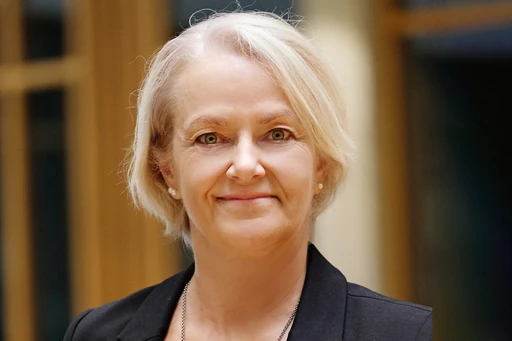
Dr. Tina Persson
When a manager says, "You need to be more optimistic," it often comes from a good place. But for many analytical minds, especially in engineering and IT-heavy environments, this comment can feel like a small punch in the stomach. Instead of feeling encouraged, they feel dismissed. What they intended as engagement, problem-solving, or fact-based feedback is suddenly interpreted as negativity.
For many individuals or teams, this is the moment when trust begins to crack. And it happens much more often than leaders realise. This is usually a "blind spot" for more emotionally driven professionals.
The Hidden Innovators You Might Be Overlooking
We often assume we can "see" who the innovators are. We notice the loud communicators, the confident storytellers, the ones who know how to choose their words carefully. They take space, and we tend to reward them for it.
But many of the people who hold your company's future are quieter. They analyse, question, and notice details that others miss. They may sound direct or overly critical, but they are often the ones who protect your project from failure or discover a new direction no one else saw.
Unfortunately, these individuals are also the ones most likely to be misunderstood. A manager hears their concern and labels it as negativity. A colleague hears a risk and interprets it as resistance. Over time, these crucial voices fade into the background, not because they stopped caring, but because they were never truly seen.
When a person has been overlooked for years, their behaviour may even be misread as activism, stubbornness, or resistance. But often, the truth is usually simpler. They spent too long speaking into a room that never listened.
What My Adaptability Intelligence Study Revealed
In a recent assignment, I measured several engineering and IT teams using an Adaptability Intelligence (AQ) assessment. The model looks at three major factors, Ability, Character, and Environment, and breaks them down into facets that influence innovation and future readiness.
The patterns were clear. These teams did not lack optimism. They did not lack grit. What they lacked most was alignment and mental flexibility.
Seeing this on paper changed my entire coaching perspective. Many individuals were working hard, thinking deeply, and caring about results, but they did not feel understood or listened to. They tried to communicate facts and logic, but the organisation tended to interpret those signals emotionally. The disconnect was cultural, not personal.
In the HR world, soft skills are often highlighted as the golden solution. But in innovation-driven organisations, we need to understand the thinking style of engineers and analytical minds. Mental flexibility becomes the bridge between logic and emotion, between facts and vision, between the individual and the team.
So What Is Mental Flexibility?
Mental flexibility is the ability to shift your thinking when the situation requires it. It means being able to look at a challenge from different angles, take in new information, change your opinion without losing your identity, and tolerate uncertainty without shutting down.
It is not about being positive.
It is about staying open.
A mentally flexible team can disagree without falling apart. They can challenge each other and still work together. They can move from plan A to plan B without drama, ego, or conflict. Mental flexibility makes space for differences, and without those differences, innovation cannot happen.
Psychological Safety Starts With Letting People Be Themselves
I once worked in an environment where I could be myself completely. I could say the wrong thing, share a raw and imperfect idea, or even make a bad joke, and nothing happened. No one judged me. No one tried to "correct" who I was. That freedom created one of the most innovative and collaborative periods of my career.
But I have also worked in an environment where I couldn't be myself. Where small parts of my personality were corrected, commented on, or subtly pushed into a shape that didn't fit me. The difference was huge. In the first environment, I was appreciated for my contribution. In the second, I felt like an outsider, even though I was doing the same work with the same commitment.
Psychological safety is not only about kindness or soft interactions. It is about respecting how people think and communicate differently. It is about trusting that a critical thinker is not trying to destroy your vision; they are trying to strengthen it.
When a manager responds to a concern with "Be more optimistic," it's a sign that psychological safety is lacking. It shows that the team is expected to adapt to the leader's comfort zone rather than work together with their full diversity of perspectives.
And without safety, innovation cannot grow.
Practical Leadership Tips to Build Mental Flexibility
• Listen for meaning, not tone.
When someone raises a concern, ask "What are you seeing that I might be missing?" instead of judging how it sounded.
• Slow the conversation down.
Take a breath before responding. Curiosity builds clarity; speed builds conflict.
• Show that different thinking styles are welcome.
Say openly: "We need both facts and vision here; both are valuable."
• Make alignment a habit.
Start meetings by revisiting the goal. When people understand the purpose, communication becomes smoother, and conflicts decrease.
• Thank people for speaking up, especially when it's uncomfortable.
A simple "Thank you for raising that" builds trust and encourages innovation.
Good luck, and feel free to reach out to us at Passage2Pro.
Tina Persson - Adaptability Intelligence expert.